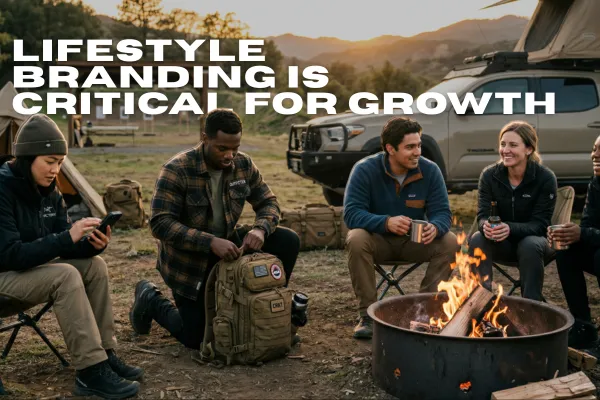
Why Lifestyle Branding Is Becoming Critical for Shooting Sports Growth
For many years, growth in the shooting sports industry was driven primarily by product innovation. Manufacturers focused on performance improvements, new platforms, and technical advancements to capture market share. While innovation remains essential, it is no longer the only driver of long term growth.
Lifestyle branding is becoming increasingly important as the industry evolves.
Recent industry reporting shows that firearms companies are expanding into licensed apparel, branded merchandise, and broader lifestyle positioning in order to remain culturally relevant and attract new demographics (Licensing International, 2026). This shift reflects a strategic understanding that modern consumers do not engage with products alone. They engage with brands that align with their identity and values.
At the same time, participation data supports the opportunity for expansion. According to the National Shooting Sports Foundation, sport shooting participation in the United States grew from 34 million participants in 2009 to over 63.5 million adults by 2022, representing significant growth over the past decade (NSSF Participation Survey). This increase indicates a broader and more diverse customer base than in prior cycles.
Market forecasts reinforce this trend. The global hunting equipment and accessories market is projected to grow steadily through 2030, supported by sustained participation and consumer spending in outdoor recreation (Grand View Research; IMARC Group). As the total addressable market expands, manufacturers must compete not only on product performance but also on brand relevance.
Younger outdoor enthusiasts and shooting sports participants engage with brands differently than previous generations. They typically begin their purchasing journey online, compare specifications across multiple retailers, and follow brands on social platforms before making buying decisions. Industry analysis indicates that companies are intentionally targeting Gen Z and millennial consumers to secure long term growth (Licensing International, 2026). For these audiences, brand authenticity and lifestyle alignment often influence purchasing decisions as much as technical features.
Trade events such as SHOT Show and IWA OutdoorClassics increasingly reflect this shift. Coverage from recent shows highlights the growing presence of branded apparel, accessories, and lifestyle oriented product extensions alongside traditional firearms and gear (NSSF SHOT Show Recap, 2026; IWA OutdoorClassics Coverage, 2026). Retailers recognize that brands capable of generating community engagement and cultural relevance can drive traffic and repeat business beyond a single transaction.
However, lifestyle expansion introduces operational complexity. As manufacturers add apparel lines, limited edition products, and cross category offerings, SKU counts increase and pricing structures become more layered. Without disciplined execution, growth initiatives can create friction within the dealer network.
If product data is inconsistent across retail websites, brand perception suffers. If MAP policies are not clearly defined and enforced, margin compression can occur across both core and lifestyle categories. If inventory visibility is inaccurate, marketing driven demand may not convert into sales.
This is where infrastructure becomes critical.
Buying Freedom Group supports manufacturers by syndicating clean, standardized product data across dealer and distributor networks, creating and enforcing MAP, MSRP, UPP, and MPT policies, powering a Real Time Inventory Locator, enabling Direct Dealer Ordering, and delivering actionable analytics and pricing insights. As brands expand their lifestyle footprint, they must ensure that their operational foundation supports increased complexity and higher consumer expectations.
Lifestyle branding drives demand by deepening emotional connection and expanding audience reach. However, demand alone does not guarantee revenue. Manufacturers that pair strong brand positioning with accurate data distribution, pricing compliance, and real time inventory visibility are better positioned to capture and sustain growth.
The industry is not moving away from product innovation. Instead, it is integrating identity, community, and cultural relevance into long term strategy. Participation growth, market forecasts, and trade show trends all indicate that lifestyle positioning is becoming a central component of competitive advantage.
For manufacturers, the strategic question is not whether lifestyle branding matters. It is whether their pricing governance, dealer connectivity, and data infrastructure are prepared to support it.
Sources
National Shooting Sports Foundation – Firearm Ownership and Sport Shooting Participation Survey
https://www.nssf.org/articles/nssfs-firearm-ownership-sports-shooting-participation-survey-reveals-american-firearm-use/
Licensing International – The Firearms Industry Focuses on Lifestyle (2026)
https://licensinginternational.org/news/the-firearms-industry-focuses-on-lifestyle/
Grand View Research – Hunting Equipment and Accessories Market Report
https://www.grandviewresearch.com/industry-analysis/hunting-equipment-accessories-market-report
IMARC Group – Global Sports Gun Market Forecast
https://www.imarcgroup.com/sports-gun-market
NSSF – 48th SHOT Show Closes With Big Crowds, Big Deals, Big Innovation (2026)
https://www.nssf.org/articles/48th-shot-show-closes-with-big-crowds-big-deals-big-innovation/
All4Shooters – IWA OutdoorClassics 2026 Coverage
https://www.all4shooters.com/en/shooting/culture/report-iwa-trade-fair-new-firearms-hunting-sport-shooters-highlights-day-1/