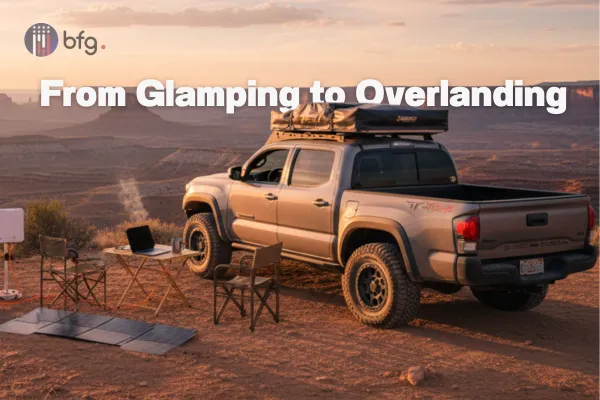
From Glamping to Overlanding: How Comfort, Connectivity, and Hybrid Consumers Are Reshaping the Outdoor Market
The outdoor industry is in the middle of a quiet but meaningful shift. What used to be cleanly separated categories — hunting, camping, overlanding, tactical, preparedness — are blending into a single, more flexible consumer mindset.
And that shift is changing what people buy, where they buy it, and which retailers win.
After spending weeks camping across Utah, Zion, Bryce Canyon, and both rims of the Grand Canyon, one thing became obvious: there is no longer a single “right” way to camp. There are just different ways to enable more time outdoors.
The Rise of the Hybrid Outdoor Consumer
The modern outdoor customer doesn’t fit neatly into a box.
They might:
Sleep in a bag on the ground one night
Run Starlink, solar power, and a fridge the next
Hunt, overland, backpack, and work remotely — sometimes on the same trip
This isn’t “glamping versus camping.” It’s a fusion of lifestyles.
Historically, markets like backpacking, hunting, tactical gear, and automotive off-road accessories operated in parallel lanes. But the reality is they’ve always shared the same customer around 80 percent of the time. The difference now is that technology has erased the tradeoffs.
Solar power, lightweight materials, rooftop tents, mobile connectivity, and modular storage let people choose how rugged or refined they want to be without leaving the outdoors behind.
Overlanding Changed the Game
Overlanding sits at the center of this convergence.
Unlike traditional backpacking or hunting trips that start at a trailhead and require carrying everything on your back, overlanding allows people to:
Drive deeper into public land
Carry power, refrigeration, and shelter
Stay out longer without sacrificing productivity or comfort
In places like Utah, where public land access is abundant, this model thrives. It enables longer trips, spontaneous exploration, and a completely different relationship with the outdoors.
And critically, it enables remote work from the field, which keeps people outdoors more often, not less.
Gear Is No Longer Single-Purpose
One of the most important insights from the conversation is this:
today’s gear earns its place by being useful everywhere.
Solar generators, portable refrigerators, power stations, climate-control units, and modular storage systems are no longer niche camping accessories. They’re:
Weekend camping tools
Emergency preparedness systems
Home backup power
Remote work infrastructure
This multi-use value is why consumers are willing to spend $500–$1,000+ per item. These products aren’t sitting in a closet waiting for a rare trip. They’re being used year-round.
The Data Confirms the Shift
Buying Freedom Group analytics reinforce what’s happening on the ground:
Soft outdoor categories (overlanding, glamping, emergency preparedness) grew 17 percent in 2024
Growth accelerated to 26 percent in 2025
That’s a 9 percent year-over-year revenue increase, even as some traditional outdoor categories softened post-COVID
This isn’t a fad. It’s a reallocation of spending toward gear that enables longer, more frequent outdoor use.
The Retail Problem: Fragmented Shopping
Here’s the friction point.
A hybrid consumer today often has to shop at:
An automotive shop for vehicle upgrades
A big-box outdoor retailer for power and camping gear
A local gun or hunting store for firearms and hunting equipment
Big retailers have the floor space and capital to carry everything. Most independent dealers don’t. That creates a broken experience for consumers and missed revenue for local stores.
How BFG Helps Dealers Compete Without Carrying Everything
This is where Buying Freedom Group fits naturally.
BFG allows smaller dealers to:
Offer expanded product catalogs online without tying up capital
Drop-ship large or high-ticket items directly to customers
Use in-store displays, QR codes, and sample programs for experiential selling
Compete with national retailers while staying local
A dealer doesn’t need to stock ten $3,000 SKUs. They just need access, visibility, and fulfillment.
For manufacturers, this means:
Broader retail reach without new contracts
Cleaner data distribution
More consistent brand presentation across channels
For consumers, it means:
One cohesive shopping experience
Local pickup options
Less driving, less friction, more time outdoors
This Isn’t About Picking Sides
This shift isn’t about choosing independent retailers over big box or vice versa.
It’s about connecting ecosystems.
The same consumer buying premium firearms, Pelican cases, and optics is also buying solar power, fridges, rooftop tents, and vehicle upgrades. When those products live in silos, everyone loses.
When they connect, everyone wins.
Final Thought
The outdoor market isn’t shrinking. It’s evolving.
Consumers want:
Flexibility
Reliability
Comfort without compromise
Gear that works everywhere, not just on one trip
Manufacturers and retailers who understand the hybrid consumer — and build systems that support them — will define the next phase of growth.
And we’re just getting started.
Ryan Stout
COO, Buying Freedom Group
